
Categories
Moving to Phoenix?Published April 6, 2026
Phoenix Industrial Vacancy Drops to 9.7% — What It Means for the Housing Market in 2026

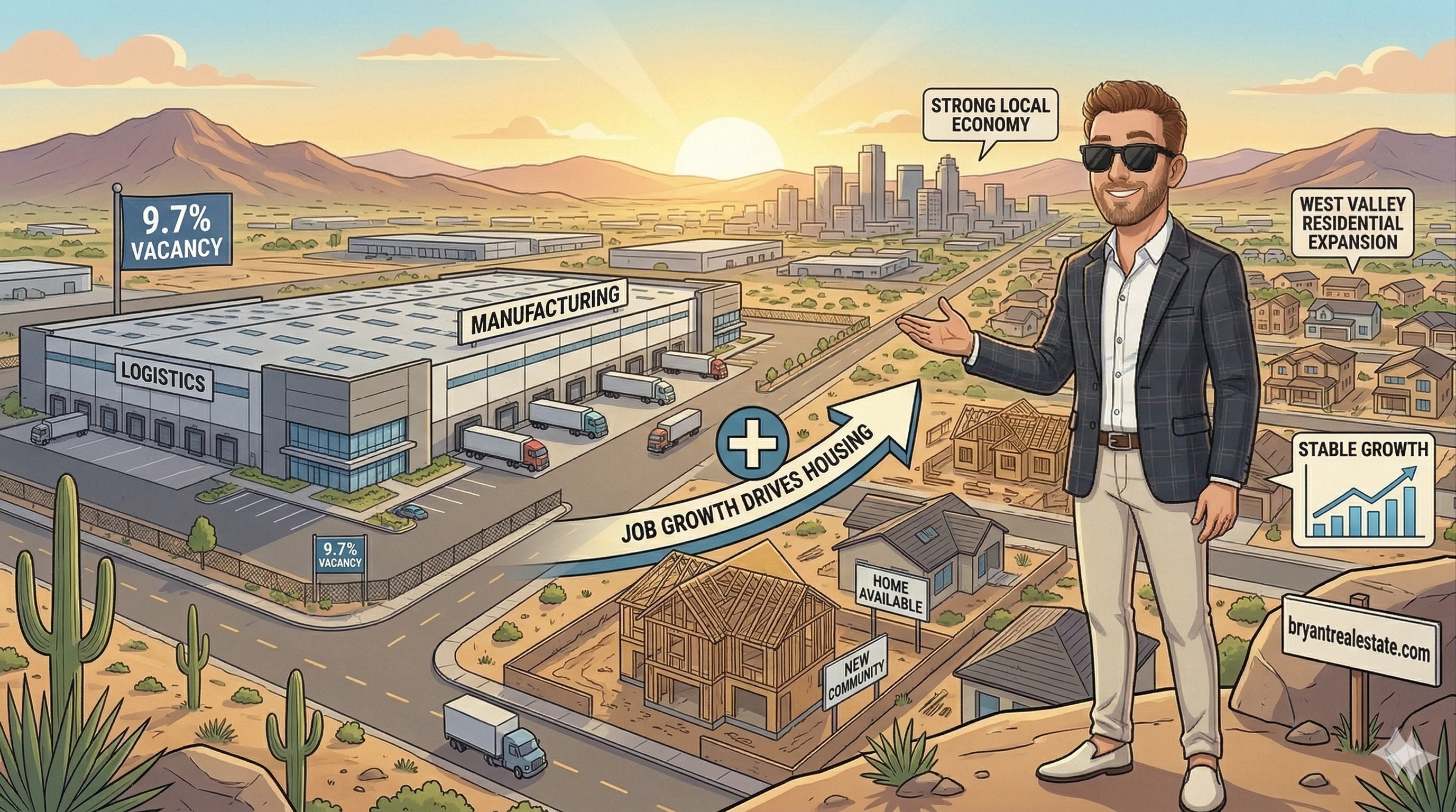
The Phoenix industrial real estate market continues to show strength, with vacancy rates recently falling to 9.7%, signaling steady demand for warehouse, logistics, and manufacturing space across the Valley. While this may seem like a commercial real estate story, it has important implications for homebuyers, sellers, and investors in the Phoenix housing market.
Understanding how industrial trends connect to residential real estate can give you a clearer picture of where the market is headed in 2026.
Why Industrial Vacancy Rates Matter
A declining vacancy rate means that more industrial space is being occupied than sitting empty — a strong indicator of economic activity and business growth.
In Phoenix, industrial demand is being driven by:
- E-commerce and logistics expansion
- Manufacturing and distribution growth
- Population increases fueling demand for goods and services
As companies continue to expand in the region, Phoenix remains a top destination for industrial development due to its strategic location, infrastructure, and workforce.
How This Impacts Phoenix Residential Real Estate
While industrial real estate and housing may seem separate, they are closely connected. Here’s how:
📈 Job Growth Drives Housing Demand
Industrial expansion brings new jobs to the Valley, many of which offer stable wages. As more people move to Phoenix for work, demand for housing increases — supporting home values and rental demand.
🏡 Growth in Key Areas
Industrial development is especially strong in areas like:
- West Valley (Goodyear, Glendale, Avondale)
- Southeast Valley (Mesa, Chandler)
These areas often see increased residential demand, as workers look for homes close to employment centers.
🚧 Infrastructure and Community Development
Industrial growth often leads to improved infrastructure — including roads, transportation access, and nearby retail. This can make surrounding neighborhoods more attractive for buyers and help drive long-term property value growth.
A More Balanced Industrial Market
While vacancy has decreased, a 9.7% rate still reflects a more balanced market compared to the ultra-tight conditions of previous years.
This balance is important because it means:
- Continued development without severe oversupply
- Sustainable growth rather than rapid spikes
- Stability across both commercial and residential sectors
For the housing market, stability in the broader economy helps create more predictable home price trends.
What This Means for Buyers and Sellers
For Buyers:
- Areas near industrial growth may offer future appreciation potential
- More job opportunities can support long-term homeownership
- Emerging neighborhoods may provide value before prices rise
For Sellers:
- Homes near growing employment hubs may see increased demand
- Strong local economies help maintain buyer confidence
- Proper pricing remains key as markets stabilize
The Big Picture: Phoenix Continues to Grow
Phoenix’s industrial strength is another sign that the region remains one of the fastest-growing markets in the country. Even as different sectors of real estate shift, the underlying drivers — job growth, population growth, and business expansion — continue to support the housing market.
A drop in industrial vacancy rates shows that Phoenix’s economy is active and expanding. While this is a commercial metric, the ripple effects are felt throughout the housing market — from increased demand to stronger home values in key areas.
For buyers, sellers, and investors, staying informed on these trends can help you make smarter real estate decisions in a rapidly evolving market.
|


or another way